Tuesday, August 09, 2011

Farm Stand Now Open

We've opened the farm stand for the season (open now through October).

The tomatoes are starting to come in as well as the corn.  It's not as bountiful yet as the picture from last year, but we do have cherry tomatoes, zucchini, cucumbers, sweet onions, and potatoes with more variety in the weeks to come.

The stand is open 7 days a week and self-serve at the end of our driveway on the farm.

Friday, August 05, 2011

Bugs for 2011

Every year we generally see the same kinds of bugs, however, every year brings new variations and the 2011 season is no different.

The big change this season that I have never seen before is grubworms in the potatoes.  Yes, the same ugly white grubs that you may find in your sod when you tear up your lawn.  A potato or two may have gotten past me and into your box where a crater is eaten into the side...that's the grub's signature handiwork.  My neighbor of 70-plus years has never seen this, so it makes me wonder what's going on.  Is it just the hot soil temps which cause them to thrive?

The potato bugs are worse than usual, but cucumber beetles are just not to be seen.  This is a situation I can live with since the cucumber beetles are very tough on a large family of produce from melons to winter squash.  Slugs, on the other hand, have been taking their toll.  It's strange though, since this is the first year I've ever seen them.  They messed with the strawberry crop a bit and I see them in the tomatoes too, but nothing we can't manage.  I hope it stays that way.

News: We'll be hosting a work day for members this Sunday afternoon (anytime between 1-4 - weather permitting).  This is by no means mandatory, but a chance to visit the farm and get your hands dirty.  Come if you can.
 
In the Box:
Purple pepper: always the first pepper for some reason.
Sweet corn: not a dozen yet, but it was typical "hunt and peck" exercise when a crop first comes in.  I always think there's more there than there actually is.
Cherry tomatoes: most are an orange variety I really like called "sungold," but there are also some Isis ans traditional red cherry tomatoes in the mix too.
Cilantro
Parsley
Cucumbers
Yukon potatoes
Red onions

Friday, July 29, 2011

Lurching into High Season

This is always a gear-changing time of the produce season.  We're really done with the early season stuff, but the high season crops like tomatoes, melons, and sweet corn haven't come in yet.  That's why this week's produce box is a bit tough to fill.  I found myself scrounging around for the last of the broccoli and when I went out to pull in the Japanese eggplant, I only found 10 on the plants...bummer.

Still, it's also an good housecleaning moment on the farm.  I'm going to take out the flail mower this weekend and mow all those areas where the early crops grew.  The stawberry patch looks like a small jungle and the spinach area is a solid mass of pigweed...things are ugly and need to go.  They also allow us the room to squeeze in some fall crops like fall cabbage and broccoli.  Also another set of greens and spinach and a big area for fall carrots (I've been talking about planting this for the last 2 weeks, but, like raising the debt ceiling, I NEED to get it done) :)

In the box:
Sweet Onions
Grenoble Green beans
Fresh basil
Red Potatoes
Cucumbers
Zucchini
Red Kale or Swiss Chard
Broccoli
Cilantro

Saturday, July 23, 2011

Garden Explosion

Wow...the weather over the last couple of weeks has been crazy.  I remember saying to myself about three weeks ago, "Hey, things are looking pretty good and the weeds are pretty much under control."  But that was before we hit this stretch of heat, rain, and evening temperatures in the 80's.  This cocktail of elements made for a garden explosion where small weeds turned into small trees and produce popped up over night.

This sounds like I good thing.  I would agree it's great for those heat-loving plants like melons, tomatoes, and corn.  However, it does throw off the plan for the season.  I've had the second planting of beans I put in three weeks after the first catch up and start putting on beans at the same time.  That wasn't supposed to happen.  We had our second planting of lettuce go from beautiful to all bitter and bolting over the course of three days.  Lastly, I'm used to spacing out pickings of zucchini and cucumbers every 3-4 days, but when I tried this last week, little zucchini turned into baseball bats in about 36 hours.  Yikes.

Still lots to do.  We're trying to get the tomato trellis up, get fall cole crops, carrots, and other greens planted, all the while rescuing plants that currently buried under 2 foot-high pigweed or lamb's quarters.  Overwhelming, yes, but a situation we've found ourselves in the past.  We always seem to pull out of it.

In the box:
Fennel: The bulb with the frilly frawns on top which smells like licorice.
Dill: Exhibit one of a crop which got overwhelmed by the fast growing weeds.  It isn't as pretty as it should be, but it should work.  I planned it to be delivered with the first potatoes.
Flat-leaf parsley
Norland Potatoes: I like this fresh potatoes, which you can tell are fresh by their tender skins which rubs off easily.
Broccoli
Cabbage: Mostly standard green Stonehead, but some of you received Alcosa, a wrinkly Savoy cabbage variety.
Green Onions
Fresh Garlic: Uncured garlic which is a bit stronger than cured garlic, but also with a fresh, bright flavor.  Use as you would any garlic.
Cukes
Summer Squash
Green Beans

Friday, July 15, 2011

Hot, Hot, Hot

This morning I was out picking peas as a front came in.  The bright sunny morning turned into night-time just before the clouds unloaded on me.  It made me think about how much we're "locked in" this time of year...all year 'round really.  Although picking peas in the rain isn't ideal...the boxes need to go out by the afternoon no matter what.  Looking to next week, it seems like we're in for a hot one.  NOAA weather even has this new picture I've never seen before of this blazing sun (left). It'll be interesting.

In the box:
Deep Purple Scallions: A different color from your typical green onions, but the same flavor.
Gonzales Green Cabbage
A mix of Cucumbers: They are first starting to come in, so there's a motley mix.  Some are squat pickling cucumbers, some are the first regular slicing cucumbers, and the smooth-skinned ones are a Middle-Eastern variety called Socrates.
Zucchini: Everyone has a standard zuke called Cashflow, and most should also have a round zuke called 8-Ball.  Otherwise you got a yellow straightneck.
Salad Mix: Sorry for the over abundance of lettuce, but this stuff needed to be cut or it would all go bad.
Red Oakleaf Lettuce
Romaine Lettuce
Frisee: The really frilly green which is typically found in a salad mix.
Snap Peas: These are edible pods peas, so don't shell them...just eat them.
Red Rubin Basil: Use the same as you would regular green basil.
"Green" Garlic: This is fresh garlic so it's not dried down or cured yet.  You use the same way as any garlic....it's just a bit stronger flavor.

Friday, July 08, 2011

Disaster Strikes Again!

July 4th typically brings some fanfare...fireworks, that kind of stuff. This year I thought I would just get an interesting show of lightning as I
watched the bolts scrawl across the night sky on my driveway. But when I was sleepily moping my way down to feed the chickens just like I do every morning, I had a quite a surprise when I looked past the barn to our high tunnel all torn apart by high winds. This was soon followed by me kicking a couple feed buckets and words I won't repeat here.

Although not the best development of the season, after I cool down, I always find the positive side.
1. The frame of the high tunnel didn't get blown away or damaged.
2. No hail. Maree and I thought hail would be a real possibility when the front hit.
3. Generally the crops are looking good this year-that's what matters. Even the plants in the high tunnel weren't damaged.

I fully expect I can repair the plastic with greenhouse tape, a strong and clear tape used in situations just like these.

Otherwise the rest of the week was fairly normal. I did spend last night haying our few fields with my neighbors even though I really should have rather been picking peas for the box.  But when bales need to come in, they need to come in.  It's all ok with me, regardless, since it's a job I always love doing.  It's one of the toughest jobs on a farm physically, but a person just feels good getting the bales stacked in the barn and nice and dry.  A person also sleeps really well too.  I told my neighbor Marv that I think anybody who currently needs sleeping pills for a good night's rest find some baling party they could help out with.

In the box:
Mammoth Melting Snow Peas
Strawberries
Basil
Arugula: The ones that look like little oak leaves.
Packman Broccoli
Napa Cabbage aka Chinese Cabbage: I thought I'd throw in a recipe video (below)...you really can't go wrong with this by sauteing it.  I like a basic recipe which is only cabbage, sugar, rice vinegar, and cayenne or red pepper flakes.
Green Onions
Red Sails Lettuce
Green Lettuce
Kohlrabi
Zucchini: Hey, first of the year.
Braising Mix (colorful bunch of greens): Some last week, but this stuff is "ready" and wouldn't last another week.

Chinese/Napa Cabbage Video Recipe:

Posted by Picasa

Friday, July 01, 2011

How Organic is Organic?

At least once a season I like to take a little time to explain our growing practices.  I'm always asked if we're organic, and I have to explain that the term has become pretty confusing since the national organic standards were put in place by USDA.  Since I'm not certified by an official third-party, I cannot use the term "organic" without being subject to a fine, so I just explain a bunch of details about our practices.  I've found eaters are most concerned about individual practices anyway and are not too concerned that I don't have the official USDA organic logo.

First and foremost we NEVER use any synthetic pesticides, herbicides, or fertilizers.  The only bug we do control is the Colorado Potato Beetle with a natural spray with an active ingredient called Spinosad, which is a bacteria which affects the bug's nervous system.  This spray is approved under organic certification, which, I know sounds kind of confusing, but there is a family of natural organic pesticides.  Since we don't have much recourse for bugs, sometimes we will use a physical barriers.  We will put a row cover (kind of like a big dryer sheet) over some greens, for example, that are really susceptible to flea beetles, so the bugs just can't get at the plants.


For fertility we use good old fashioned manure we procure from our neighbors and manure from our chickens and sheep.  Last year we had nearly 20 loads spread from my neighbor's dairy herd besides the bedding from last year's broilers and a good fall cleaning of the barn where the egg layers and sheep hang out.  Corn is a heavy feeder, so we sidedress the young plants with a composed chicken manure in pelletized form.  Also this year we are experimenting with using worm castings on our celery and lettuce, which are both heavy feeders but need a fertilizer which is gentle and safe.  We actually get this from one of our CSA members, Betty and Leroy Fiedler, who just started their worm composting business last year called Genesis on Lake Franklin.

For weeds, it's a 3 stage process.  We do our best to take out as many as possible by mechanical cultivation with the tractor, next we hoe, and, we always end up pulling weeds by hand.  If a person is really good at timing stage 1 and 2, you never need to get to stage 3, but that hasn't been the case with us so far.

Bottom line, we raise our stuff as best we can to make sure  the farm and plants are healthy which produces good food which makes your family and our own family healthy.  Let me know if there's anything you want to know more about.

Important Note: We will have to deliver on Saturday, July 23 instead of Friday, July 22 since I have to be out of town for my other job.  Let me know if this is an issue and we'll try to work something out.

In the box:
Strawberries: the heavy rains last week did splash dirt a bit on them, so I advise washing.
Kohlrabi
Salad Mix (see recipe below)
Swiss Chard
French Breakfast Radishes
Braising Mix (colorful greens) or Green Lance (small broccoli plants): Either are good for adding to a stir fry right at the end.
Spinach
Garlic scapes (funny curly onions): these are shoots that garlic put up this time of year.  Think of them as a garlic-y green onion and use where you would garlic.

Recipe
If you haven't read Barbara Kingsolver's book, Animal, Vegetable, Miracle, you may just want to check it out during this CSA season.  It's a good read with recipes included that may help you out when stumped on how to use something in the box.  Here's a recipe for this week on using greens: http://www.animalvegetablemiracle.com/EGGS%20IN%20A%20NEST.pdf
This recipe also uses eggs...you are able to add on Lida Farm eggs through Local Dirt as they are available throughout the season!

Friday, June 24, 2011

Start of the Produce Season

I was thinking out in the field this morning that today I'm kind of like a baseball player on the first day of spring training.  I'm excited to start another produce season, but, after a winter without the constant game schedule,  I find I'm a bit out of shape and just not into the swing of it.  I remember harvesting, washing, and packing spinach much quicker than I was able to today.  The hands just didn't work as quickly as before.  Oh well, after 7 CSA seasons, I don't panic since I know that it's a matter of adjustment and the season will get into full swing.

The produce is much the same way.  Since it's out of practice, the ground can only produce funky cool-season greens this time of year (Mizuna, anyone?).  This makes for the kind of CSA box which could really freak somebody out.  But, I assure you, the garden will get into the swing of the season too and start kicking out a whole mix of veggies without effort.  I know this is true because I've seen the signs of summer out on the farm like the first strawberries and blossoms on squash.  A rock-solid season may take some cooperation from the weather, but I'm optimistic.

In the box:
Mizuna - A Japanese green which looks like a bunch of Dandelions.  This is commonly used in a salad mix with lettuce or in a stir fry at the end (see recipe)
Bok Choy - a few received a purple bok choy
French Breakfast Radishes
Spinach
Bunch of Red Russian or Lacinato Kale - You have Lacinato or Dino kale if the leaves of your bunch are dark green.  You have Red Russian kale if your bunch is purple and the leaves are big and jaded.
Mint - small bunch of 4-6 sprigs.  I got into Mojitos this year using fresh mint.  Give it a whirl.
Strawberries (some members) - sorry, I know it's completely unfair, but we had just a small portion of the strawberry patch ripening, so I had to "play god" with who did and who did not get a pint.

Bok Choy and Mizuna stir fry 
Ryan's version based on a recipe from Epicurious 
1 bunch mizuna
1-2 bok choy, roughly chopped
2 cloves garlic, minced or pressed
2 T soy sauce
2 t sesame
2 t peanut oil
1 t rice vinegar

Mix the sauce (2 T soy sauce, 1 t rice vinegar, 2 t sesame oil) and set aside.  Add 2 t peanut oil to pan over medium high heat.  Add the bok choy stalks and saute until crisp tender.  Add bok choy leaves and garlic and saute a minute before adding the sauce.  Once the bok choy leaves start to wilt, add the mizuna for 1-2 minutes.  You can serve over rice or rice noodles.  I broiled some teriyaki-merinated pork which I tossed in at the end.

Friday, June 10, 2011

Dead Chickens and a Half Completed Greenhouse

Well, a typical spring season so far. I wish the produce were growing better and further along-another cool spring isn't helping matters. I'm behind on most things that need to get done and if it's not one challenge it's another.

Today's Challenge
This morning as I sleepily went out to feed the laying hens like normal I noticed big piles of feathers all about the coop. Being the sleuth that I am, I followed the trail out into the pasture where I found not one, not two, but four dead chickens. Argghhh! Whatever came in last night wasn't even courteous enough to kill off the old laying hens, but went for the young ones now just begging to produce eggs. Don't these predators
know I've got better things to do this time of year than to play security guard to some laying hens?

Typical Incomplete Spring Project
Like most people who farm, I dream up how the spring season will unfold every winter from the warm confines of my home. This winter I was thinking that I would leisurely put up a new 26 by 96 foot high tunnels and have it planted with tomatoes, cucumbers, and pepper by early May.
Hah...three weeks ago we finally finished the frame and it still sits there without any plastic covering (a greenhouse is pretty useless without a covering).

Winter plans never foresee the crazy planting schedule that explodes in my face every spring. It's a lot of waiting and waiting because of cold, rain, and high winds before trying to plug in as many seeds and plants as possible in a whatever window of time nature gives me. I also have to juggle this with the beginning battle with weeds which erupts in June as well as the first forays of insect mercenaries who try begin their invasion on all fronts. Typical...

Dad and I working on high tunnel in April (note snow on ground!):
Still, it always turns around. The plants will grow. I'll fight the weeds and bugs. Produce will be harvested and delivered. It's only a matter of time, but I know we'll get there.

Sunday, May 01, 2011

What Keeps us Busy in the Spring?

Before we start planting outside and really firing up the greenhouse, we try to take care of some items we won't have time to do when the vegetable season starts in earnest. We take care of jobs related to the sheep like trimming hooves and shearing (I thankfully hired this out this year).

For the last three years we've been out sugaring in April, tapping trees and waiting, waiting, waiting for sap to boil down in to syrup. Here's a picture of Maree and Graham finishing off syrup at the end of the process:
The finished product:
Ever wonder what happens to old laying hens? It's called canned chicken and broth. The chickens are cut up, put into mason jars, and processed in a pressure canner. The final product is kind of gross looking, but the flavor is great. It's pretty convenient when you're making a pot pie or chicken soup and you have pre-cooked chicken on hand. The backs and necks get boiled for broth and then processed in the pressure canner. 4 chickens yielded 14 quarts of broth and 7 quarts of canned chicken:


Saturday, March 12, 2011

Turbine up and running


I've written before about the turbine we're having put up at our place. There were some challenges along the way, but it's been up and running now for nearly a month!

It took two cranes to pull up the 110-foot tower. One of our big setbacks was the cold in January since cranes and hydraulics don't work so well in below-zero temperatures.
Almost there:

Complete:
It's an exciting thing putting up a turbine. For the first couple weeks I think we checked how many kilowatt hours were produced about every hour. Ours is a grid-tied system, so we don't have any batteries or whatever and are still attached to the grid just like anybody's house. If it's windy and we're producing power, we use the electricity from the turbine instead of the electrical system. If we're producing more than we need, Lake Region buys back the power through "net metering" if you've heard of that.

A small wind system isn't cheap and the payback takes a long time. So why did we do it? We were motivated some by being self-sufficient. But our main driver was the need to take responsibility for our own contributions to climate change and the negatives that come with energy production. Did you know that it takes a lump of coal the size of your fist to produce a kilowatt hour? Image throwing 1,000 down in your basement each month...does that give you a better sense of how your electrical needs effect the planet? A portion of North Dakota is being strip mined right now so I can flip on a light switch; in other parts of the US, a mountaintop in West Virginia is literally being blown right off. We were entrusted to steward Creation not simply consume it.


Thursday, January 20, 2011

Consider joining Lida Farm CSA

Looking for fresh produce delivered to your door throughout the upcoming growing season? Well become a member of Lida Farm's CSA program.

If CSA is new to you, check out this neat video a couple members from a different CSA in the cities made last year, explaining CSA and what to expect:


We offer an every week CSA share for between $400-$450, where you will receive a delivery of what's in season each week for 16 weeks. We also offer an "every-other-week" CSA share for $200-250. We deliver to Pelican Rapids, Detroit Lakes, Vergas, and a lot of the lakes in between. Besides the produce we also will be raising whole chickens again this year for $2.85/lb. You have the option of reserving how every many you'd like.

This will be our 9th season operating a CSA in Otter Tail County, so we like to think we know what we're doing at this point. All our crops are grown without any synthetic pesticides, herbicides, or fertilizers. We have a number of new crops we're planning as well as a new high tunnel going up this spring to help us get some peppers and tomatoes to you earlier in the season. We concentrate on the staples like lettuce, tomatoes, and sweet corn, but we also make sure to mix it up with some interesting crops too.

So, if you are interested in becoming a member of Lida Farm, please get in contact with us. Our e-mail is lidafarmer@gmail.com and our phone is 218-342-2619. Call with questions...you won't be bugging us. Our brochure about our CSA program and the order form are linked below. But please make sure we are not filled up for the season and you're in our delivery area before sending in the order form.

Click here for our brochure
Click here for the 2013 order form

Wednesday, January 12, 2011

Small Wind Project Almost Done

The small wind project is almost complete. We've had a big tower sitting on our hill for the last month first waiting for the turbine itself to come, and now we've been waiting for the go ahead from our electric cooperative, Lake Region Electric. We're still looking to finalize our interconnection agreement and also have the electrical work inspected for the final ok. The last thing after that is to get a crane here to tilt the tower up and hopefully the wind still blows.

Last month RWP put together the tower and affixed the turbine. The tower came in a bunch of pieces and needed to be assembled in the snow:A completed 110-foot tower:
A close up of the turbine hub without the blades attached yet:


Thursday, December 02, 2010

Small Wind Turbine Construction In Process

Well, the small wind turbine construction project continues. Dan and Bill from Residential Wind Power are looking to complete the project before Christmas. The tower from Rohn tower is now manufactured and on its way and RWP has the turbine from Ventera Energy on hand, ready for final connection to the tower.

First Dan dug a really deep hole, about 14 feet across and 10 feet deep for the foundation. This step is obviously important, considering the foundation not only needs to hold up a 110-foot tower with a 500 lb turbine on top, but also keep that tower up nice and straight in some major winds.
After some serious digging, Dan and Bill poured the foundation. Since this is a tripod tower with three legs, three pylons were put in place with mounts on top to attach to the tower. After putting in the foundation, Dan and Bill ran the wire about 300 feet down to our woodshed where the inverter will be placed. Power will run down the line to the inverter, become transformed into usable energy and then run the short distance to our main junction box. This was done just in time before freeze up. Once the ground froze, this would have been impossible.


Sunday, November 21, 2010

Small Wind Turbine Construction

After figuring that if the organic vegetable growers weren't willing to buy into wind energy in this environment, then nobody would, we decided to take the plunge and purchase a small wind system. Our system is a 10 kW Ventera made in Duluth, MN and our installers are Residential Wind Power from New York Mills, MN. They started construction this October and I'll be sharing some pictures from start to finish.
This is our pre-turbine picture. The tower will stand behind the barn at 110 feet, so should clear these trees pretty easily.
Right now this area is home to our sheep pasture. The orange flag marks the spot the tower will go. It probably won't be till the first of the year that the tower and turbine are in place since it takes 12 weeks or so to construct the tower...they only start manufacturing the tower when they get the order.
The excavator is in place...Dan and Bill figure it will just take a few days to excavate for the foundation, trench the wire a few hundred yards to the electrical box, and pour the foundation.

Friday, October 01, 2010

The End of the Line

Well today is the final CSA delivery of the season (although we will continue Sunday deliveries every other week of dairy and fall crops in the off season).

This is always a bittersweet moment for me. I'm typically worn out enough to be happy that the last CSA box is going out the door, but I'm a bit sad that the season's over too. These times often make me reflect on how we did. Although we had some nice warm weather this year, I was not terribly impressed with the way things grew. At the end of the day, the weeds loved the weather, which made them terrible to keep up with, and the serious rains we had all summer really stunted the growth of the plants. If I were grading the season, I would give it a C+.

Now I'm looking forward to next year, shooting for a B+ or A- at the least. We have a lot of time now to prepare the field for next season, spreading manure and disking in this years crops so they begin to break down. This should make the fields have better soil texture and greater fertility. I will also be ordering a big high tunnel (hoop-shaped greenhouse) in the next couple of days, which will allow us to grow early greens, tomatoes, and peppers. I'm sure I'll also dream up a few more projects to make 2011 great!

Lastly, I would like to thank all of you for being members this year. Maree and I could not do what we do without your commitment. All members will be receiving a survey by e-mail; please let us know how it worked from your end.

In the box:
A couple peppers
Celeriac (the ugly bulb which has a celery top): you can use this in place of celery in any recipe.
Red Kuri or Blue Bonnet winter squash
Spaghetti Squash: Oblong Yellow Squash
Two Pie Pumpkins: Yes, these work well for pies! Typically you cut in half, bake on a cookie sheet upside down, and scoop out after it's soft.
Red Potatoes
Bunch of Carrots
Parsnips: the ones which look like white carrots

Friday, September 24, 2010

Friday Harvests

I've noticed this season that it takes me longer and longer to harvest the produce for the box on Fridays. I typically wake up early, get out harvesting, and wrap up the boxes by noon. Sometimes when there are a lot of time-intensive crops like peas or beans, it may take a while longer or we get going on Thursday night. That's why it's been so frustrating this season to be finishing up at 2 or even 3 pm and dashing off to get deliveries done before 4.

Each week I think I'm just getting old and slow, but, reflecting back over the season, I think this weather is what has been killing me. Today, like a lot of Fridays, I'm going to have to harvest in mud and puddles of water. Getting stuff out of the ground, however, is only part of the problem. In order to get produce clean, I spend lots of time spraying, soaking, and scrubbing produce so it doesn't look like a mudcake. I bet 75% of Friday harvests have been in the mud after a recent rain and about 25% of the time have been done in the rain. No wonder I'm getting slow...maybe it's not aging (although we all know there's no gettin
g around it)?Reminder: We're having our Lida Farm get together this Saturday evening, starting at 6:30. It's a casual event with snacks, drinks, and a bonfire. If so inclined, bring something, but just bring yourself. Meet other members and check out the farm. Hope you can make it.

BTW we also had the Pelican Rapids Early Childhood class out this Monday (see picture):


In the box:
Norvalley White Potatoes
Rutebega(s): root with greens on top.
Butternut Squash: all winter squash should be stored in dry, sunny location (don't refrigerate)...winter squash actually will get sweeter with time.
Acorn Squash
Garlic
Harelred Apples
Collard Greens
Eggplant
Summer Squash

Sunday, September 19, 2010

CSA get together September 25th

Every year we have a little get together at Lida Farm for the year's CSA members, so you can check out the farm and meet all those other people who have also been receiving a waxed box periodically in their garage or porch. For the last few years we've been having a potluck thing for Sunday dinner, but we thought we'd change it up this year. So we're going for an after dinner snacks, drinks, and bonfire affair. Casual, no need to make a hotdish or anything, stick around as long as you'd like.

So, this is the lowdown:
  • Time: 6:30
  • Place: Lida Farm (44593 275th Ave. - corner of Otter Tail County Highway 4 and East Lake Lida Road-there is a map on the website to the right)
  • Activities: Ryan gives his typical farm tour, drinks, bonfire
  • What to bring: mainly just bring yourself, but, if so inclined, bring something to drink or some kind of snack/appetizer (your homemade salsa, etc.) We will be providing a mix of drinks and snacks ourselves.

Friday, September 10, 2010

Late Season Slump

Well, it's terrible out there. I just came in for some coffee to get a little boost to harvest and just plain warm up. I hope this monsoon slump we've been in will finally turn around!

I always find this a pretty tough time of year to carry on. There are only three more weeks of the CSA after this week and we're realistically about a week from a first frost. Lots of stuff still needs to be harvested, but, having been at it for quite a while, I'm down right tired. I don't think I could pull it off without the caffeine. Still, I'm always a bit sad when that first frost comes.

In the box:
Celery
Cantaloupe
Buttercup winter squash
Yellow onion/red onion
Garlic
Juliet tomatoes
A mix of peppers
Cucumbers
Green zebra tomatoes: these are ripe now....don't wait for them to change color just because they are green.

Friday, September 03, 2010

Fall Weather

This weather has been a nice change from dewpoints in the 60s and temperatures in the 90s. The change has made me appreciate the oncoming of fall, which is just around the corner. I hate to be the one to break it to you, but summer is almost over.

How does this affect growing at the farm? What I find fascinating is the effect fall weather has on growing time. In the summer, something like salad mix can go from seed to full-sized mix in 3 weeks, whereas it will take twice as long in fall weather. It seems like its still somewhat warm and sunny, but we just don't have the full strength of the sun and length of day to move things along. This all reminds me to get that fall salad mix planted. Gotta go!

In the box:
Green Zebra Tomatoes
Red Celebrity Tomatoes
San Marzano Roma Tomatoes
Watermelon
Cantaloupe
Sweet White Onions
Green Peppers
Little Red Cabbage
Kale or Collards
Thai Basil: pretty nice variety with a hint of licorice
Parsley
Summer Squash


Friday, August 27, 2010

Today made me think about how busy you get when you begin to combine activities. We all have those things we do, have experience doing, and, consequently, are good at. For me, this is growing produce. We've been doing this a while-9 seasons-and, granted, we get a lot of things wrong every season, but we got it down for the most part.

This season, of course, we just had to challenge ourselves (as if having a third child wasn't enough) by branching out into raising chickens. Today was one of those days when I had to layer this new enterprise on top of my usual routine, which makes for a busy day.

Usually I can get outside and start harvesting produce on Fridays before 7 am, but, today, I didn't get out into the field until nearly 9 am because the chickens had a date at the processors in Ashby at 7 am (this is one of the few USDA-inspected poultry processors people like I can bring poultry to in the nation--even growers from central WI cart birds up there). So, instead of hunting for melons this morning, I was on the road at 5:30 with a 20-foot trailer and 90 chickens in the back, cruising down the interstate. This is actually a really nice way to start the day, having that first cup of coffee with the rest of the world asleep. Once at the processors, it's time to catch and move birds two by two into crates to go into the plant. This isn't as pleasant an activity, but it needs to get done. They cooperated for the most part and I only had one escape and hide under the trailer on me. I kept thinking the people of Ashby must come down to watch some of this entertainment of people unloading and chasing chickens around.

Anyway, we have another load going down to the processors in two weeks and can start making arrangements to deliver the broilers people ordered in the spring. Although this morning chore set us back a bit today, that's just what's needed sometimes as we juggle all the different chores that comes with being a diversified farm (livestock, crops, pasture, garden).

In the box:
Melons: everyone got a cantaloupe and either a watermelon or yellow Spanish melon
Red Tomatoes: standard Celebrity variety
Juliet Roma tomatoes
Eggplant
Beets: These are pretty small and pathetic, I know, but I figured some beets are better than no beets at all
Leeks
Arugula: oakleaf-shaped greens in a bunch
Daikon Radish: Don't be afraid of this one, check out the recipe below.
A few peppers: Red ones are Italia Peppers and green are Biscayne
Yukon Gold Potatoes
Garlic


Daikon Radish and Carrot Salad
From The St. Paul Farmers Market Cookbook
1 4-inch piece of daikon radish, peeled
2 tsp. salt
2 med. carrots, peeled
2 c. ice water
3 T. dressing

Dressing:
1 T. soy sauce
1 T. sesame oil

Use a vegetable peeler to peel down the radish lengthwise, making long thin shreds. Put shreds in a bowl and sprinkle with 1 tsp. salt. Cover and refrigerate 1 hour. Cut carrots in half lengthwise. Use a vegetable peeler to peel down the carrot half, lengthwise, making long thin shreds. In a large bowl, combine ice water, remaining 1 tsp.. salt and the carrot and radish shreds. Wix well, cover and refrigerate 1 hour.
Make the dressing. In a small bowl, combine soy sauce, sugar and sesame oil. Stir until sugar is dissolved. Cover and refrigerate until ready to use. Rinse radish and carrot to remove salt. Drain. Toss with dressing and chill.

Thursday, August 19, 2010

CSA Week 10: High Season Harvest

Well, we're over halfway through the season. High season is coming in and those tomatoes are ripening up big time. It's that time of year when it's tough to keep up on all the harvesting that needs to take place. In some respects this is a tough time of year, but it's also really exciting...really what we've been waiting for for the last 3-4 months. Nothing get me going like going out and finding ripened melons, jumping around from one to another, knocking them, lifting them, checking out the tendrils to make sure they are ripe (even after all that, they can still be a dud).

Enjoy the heat.

In the box:
Bi-color Seneca Dancer corn
or some Silver Queen white corn
Japanese Eggplant or Some Calliope Eggplant
Cherry Tomato mix
Beans (tri-color mix)
Syrian Pink Tomatoes (Yes, they are ripe when pink)
Cherokee Purple Tomatoes
A Red Tomato
Specialty Carrot Mix (purple haze, atomic red, satin white)
Kale or Collard Greens
Fresh Thyme
A melon or two (some got a canteloupe, others watermelon)

Friday, August 13, 2010

The People Behind the Farm: Cosmo

OK I realize that Cosmo is a dog, not a person, but he's definately a personality around Lida Farm and one who certainly has a role to play.
Cosmo's been with us now six years and knows his place in the operation. He makes an effort to greet most everybody who stops by the farmstand (whether they like dogs or not...I'm still waiting for him to scratch up somebody's car, since he's that friendly). Probably his most important job, however, is fighting rodents and other predators who would do the plants or animals harm. I think he survives mainly on a diet of voles, moles, and gophers in the summer. Also he keeps the airspace clear of any roving birds who may want to eat a chicken and guards the sweet corn from the racoons (although he's not perfect since parts of the sweet corn patch have obviously been ransacked by those thieves of the night). He's also good company too!

My big observation of the week is that farming moves really fast sometimes as evidenced by our losing 33 broilers this week in a matter of hours. On one of our recent scorching days, Maree went down to fill up their water and feeders only to find a bunch of chickens all laying on the ground, some literally belly up, with their tongues hanging out. Some were already dead and we tried for a couple hours to shoot water into those who were hanging on, although we lost some of them too. It was not a good day! And this all happened in the 4 hours we had last watered them. We have lots of insight about where we went wrong, but it just goes to show that you always need to stay on your toes. Reflecting on it, I think we often view farms as idyllic places where ma and pa just plod along doing their chores and not much ever happns, but, in reality, you'd be surprised at the pace...things can move just as fast here as the New York stock exchange.

In the box:
Bodacious Yellow Sweetcorn (maybe some white corn mixed in).
Yukon Gold Potatoes
Green Onions aka Scallions
A small head Romaine (summer lettuce isn't ever pretty).
Yellow Sun Carrots
Some Tomatoes (the dark purple one is called Cherokee Purple...great flavored, so eat fresh, not cooked).
A couple Cucumbers

Quinoa and Fresh Corn with Scallions
From "Vegetarian Cooking for Everyone"
3 ears of corn
2 cups vegetable stock or water
1 cup quinoa, rinsed
Salt and Pepper
1 T. butter or canola oil
1/2 cup thinly sliced scallions, including some greens
1/3 cup crumbled feta or grated cheddar
Shuck the corn, slice off the kernels, and set them aside. Reverse your knife and scrape the cobs to get the milk. Bring the stock to a boil in a saucepan; add the quinoa, corn scrapings, and 1/2 t. salt. Lower the heat, cover and simmer for 15 minutes. Turn off the heat and let stand for 5 minutes. Melt the butter in a small skillet, add the scallions and corn kernels, and cook over med-high heat until scallions are bright green, about 3 minutes. Toss them with the quinoa. Season with pepper and serve, garnished with crumbled cheese. Can be used as a side dish or a filling for tomatoes or zucchini.

Friday, August 06, 2010

The People Behind the Farm Series: Jane

Although I am pretty much the chief cook and bottle-washer around here, there are many others that play a significant part at Lida Farm that you may not be visible to you. I'm going take some time over the next few weeks to feature each, so you get to know "The People Behind the Farm."

Our first snapshot is of Jane Solie, our volunteer "apprentice" of the season. Jane has a real interest in sustainable agriculture and came to us this early summer requesting to help out to learn the craft of vegetable production. Jane has been living in Montana the last few years, but is from Detroit Lakes and is in the area for the season. Jane helps us with general production on the farm, aka "weeding" and helps each Friday harvesting, packing boxes, and some deliveries. She will be working on an 0rganic dairy goat farm this fall and winter-in Hawaii of all places! Sounds good to me.

It's very common for CSA operations like our own to take on apprentices each season. This is how I learned the ropes and it's also how current growers are training the next generation. I know that without Jane it would be much harder for us to produce a quality box each week.

In the box:
A smattering of bi-color corn
Summer Squash
Alisa Craig Sweet Onions
Garlic
A Couple Green Peppers
Bok Choi
Parsley
Basil
Cherry Tomato Mix
Yellow Taxi Tomatoes
Alcosa Cabbage
Specialty Red Japanese Radish


Wednesday, July 28, 2010

My Love of Tomatoes


Well,the tomatoes are starting to ripen. This is pretty exciting for me, because, although I raise a mix of produce, I really consider myself a tomato person. I consider it my true medium. You won't find too many in the box this week, because the first week is always a "hunt and peck" operation where I have to search high and low just to get a half case. But once they start going, it becomes an avalanche pretty quick.

So, what's so great about tomatoes you ask? There's a number of things.
  • I like the huge variety of tomatoes. We grow 13-15 varieties-which seems like a lot-but it's absolutely endless. Even the names are good: Sungold, Green Zebra, and-my favorite-Nebraska Wedding (isn't that just a great name for a tomato?).
  • I like endless tastes of tomatoes and how they change from season to season. Tomatoes are the closest thing we have to grapes around here. Considering on the soil, climate, weather, you get different tastes...terroir for you foodsnobs out there :) A real dry year produces vibrant sweet flavors. We've definitely had the heat, but we've been a bit wet, so let's see on taste this year.
  • I like harvesting tomatoes. Things like carrots are just some you go out and harvest-there's no allure-but tomatoes are like a gold digging expedition. I crawl around under this big canopy of foliage, prospecting for big tomatoes, colorful tomatoes, ones with crazy shapes and so on. It's also a big harvest, which I have to approach as "hitting it hard" when the time comes, like a fisherman in high season. It's a great feeling pulling cases upon cases into the packing shed.
So, let the season begin. I can't think of a greater sign of high summer season!

In the box:
A smattering of tomatoes (Orange cherry ones are called Sungold, some small Taxi tomatoes)
Lettuce (Greenleaf, Redleaf, or both)
Beets (A bit on the small side, but I just couldn't wait any longer)
Red Norland Potatoes
Small Red Marble onion(s)
Native Gem Sweet Corn
Red Express Cabbage or Stonehead Green Cabbage
Lacinato Kale aka Dino Kale
Bunch of Carrots
Cucumbers

Kale Potato Soup
From "Simply in Season"
More of an Autumnal recipe, but would work well for this box.
1 bunch kale, chopped and steamed. Set aside.

1 T. butter
1 large onion
1 clove garlic, minced
Melt butter in soup pot. Add onion and saute until golden. Add garlic, saute another minute.

2 large potatoes, diced
2 cups hot water or broth
Add, bring to boil, reduce heat and simmer until potatoes are soft. Remove half of the cooked potatoes, puree the rest with the cooking liquid and return to the soup pot. Return reserved potatoes and steamed kale to soup pot.

3 cups water or broth
1/2 t. salt or to taste
pepper to taste
Add along with additional hot water or milk to preferred consistency. Heat gently until hot.


Friday, July 23, 2010

Growing with Three Kids

Our third child, Graham (look left), was born this April with much to-do. I'm still not sure his birth fit into the growing season well or not. It was good that he came before too much fieldwork got going, but it got us off our game a bit at the beginning of the season when getting on top of things is really important.
I'm often asked how we actually operate Lida Farm with now three kids and myself with a full-time job. And the only way to explain it is teamwork. Maree and I learned a while ago that both of us trying to do work outside just makes our marriage suffer because we are always arguing about who's "turn" it is to hold the crying baby or catch a kid before he or she drives their trike into the township road. So, we do a constant trade off. When I get home from work, Mar is often in the mood to get away from kids, so I watch them and make dinner as she works outside. Then she does the same for me on other nights and on harvest days. A definite balancing act!
In the box:
Stonehead green cabbage
Broccoli
Silver Rose Garlic
Small amount of braising mix (mix of greens bound with a rubber band)
Arugula (oakleaf-looking green that has a peanut-y taste)
Parsley
Red Norland Potatoes
Chives (to go with the potatoes)
Yellow beans
Summer squash mix (some zucchini, some yellow)

Arugula Pesto
From How to Cook Everything by Mark Bittman
2 cups arugula, washed and dried
1 clove garlic, crushed
2 T. walnuts or pine nuts, lightly toasted
salt and pepper to taste
Remove any tough stems from the arugula. Place it in a food processor or blender with the garlic, nuts, salt and pepper.
Add a 1/4 cup olive oil and pulse a few times. With motor running add additional olive oil to make a creamy sauce. Use within a day. Goes well with grilled chicken or shrimp.

Friday, July 16, 2010

Hail!

Seems like every year I write at least one "disaster" entry. For this season, our biggest disaster came Tuesday night and Wednesday morning. We had hail, serious rain, and a massive wind. Yes, this definately affects the plants, but, on the good side, this came at a pretty good time (if there is one). This is the time of year when tomatoes are not only small and green, but also hidden under a lot of foliage, so it will leave some pitting, but won't leave bid open sores on the fruit. If tomatoes were orange, ripening to red, it would be terrible.

Not that there's no issue with hail.
You will probably notice some holes in the Napa cabbage leaves and maybe some dents. The chicks in the new lean-to also got a bit wet through the whole ordeal too, so I had to carry a few under the heat lamps to get them going again.

FYI: Member workday this Sunday at 2 pm at the farm. This isn't anything mandatory, but if you'd like to get your hands dirty a bit, see the farm, and pull some weeds, please come. I promise to find something for you to do. We'll probably go til 4 or 5, so come for what you can.

In the box:
Napa cabbage
Cauliflower (not the best...it's a bit purple from the heat and sun, otherwise just fine).
Cukes
Summer Squash (the yellow variety called Sunburst and you'd use the same way as Zucchini)
Fennel
Green Beans
Green kale
Bunch of Carrots

Greek Fennel Skillet
(from Simply in Season)
2 cloves garlic (crushed or minced)
In a medium skillet saute in 2T olive oil for 1 minute

2 medium fennel bulbs (the white part of the fennel plant)
1 large onion
Add and saute until tender, 5-10 minutes

1 T lemon juice
3 medium tomatoes (chopped)
Add and cook over medium heat until part of the liquid evaporates, 10 minutes. Salt and pepper to taste.

1 1/2 cups feta cheese (crumbled) or mozzarella cheese
1/2 cup black olives (optional)
Stir in.

Mar and I gave this a try last season and really liked it. We served over crusty Italian bread, although it would work over pasta too.

Friday, July 09, 2010

Weird Produce in a CSA Box

What can I say? I strive to go long on the standard veggies, but what would a CSA be without a little surprise? You know when you open your box and find some real oddball veggie you need a botanical guide to identify.

Members often tell me this is part of what they like about CSA, although too many surprises tends to scare some people away. Still, I think you trying to hit a curveball every now and then is probably good for you...when you get that bulb of fennel in your box here in July, I hope you approach it as an adventure to reach out for that cookbook you never look at and try something new. I'm just as bad as anyone, making those dishes I've always done, but it's good to get out of my rut too.

I was thinking about this today when I was out picking fava beans. I have to confess I've never grown these or eaten these in my life, so they are a grand experiment. We had to do a little research to get a general jist to prepare them, especially since you just have a few. A simple way to use your fava beans is to shell them, boil the beans (just a few minutes), remove skin, and toss with olive oil and lemon juice and serve with a sharp cheese like pecorino or parmesan. Otherwise, you're on your own-good luck!

In the box:
English Peas (the ones you need to shell)
Deep Purple Scallions
Broccoli
Kohlrabi (these could also be added to recipe below)
Parsley
Fresh Mint (stuff that look like a weed)
Fava Beans (big monster beans):
1-2 little cucumbers (just a taste, but the first of the season!)
Black Spanish Onions (see recipe below)
Salad Mix
A bit of Spinach (every week for 4 weeks...are you tired of this yet?)
Raspberries (for some)


RADISH SLAW

This could also be good without the cabbage.

2-3 black Spanish radishes, scrubbed and grated
3 cups finely shredded cabbage
1 cup coarsely grated carrots, any color
1/2 cup thinly sliced green or red onion
2 tablespoons fresh lemon juice
1/2 teaspoon sugar
2 tablespoons olive oil
2 tablespoons finely chopped fresh parsley, cilantro, or mint leaves

In a bowl toss together the radishes, the cabbage, the carrots, the onion, the lemon juice, the sugar, the oil, the herb, and salt and pepper to taste.

Friday, July 02, 2010

Farming in June

June's a tough month in market gardening.

The guy I used to work for would always say, "If you have a good June, you'll have a good season." Sitting here in my 7th season after being an apprentice, I would have to agree.

June and into July is the only time of the year when a grower has all major activities going on at once: cultivating/weeding, planting, and harvesting. It's a tough balancing act, because, you can get sidelined concentrating on one and do a bad job on another. So, spending too much time on pulling weeds and hoeing and you may just forget about that second planting of beans or putting in cabbage or cauliflower for the fall. Or Thursday rolls around, and, although you have potatoes that need hilling and beets in need of weeding, you have to spend half a day picking strawberries and peas. Yep, it's a balancing act.

So, Ryan, how was June? Well, plantings are on and harvesting is going well, but those weeds are getting fierce. Good thing we have a long 4th of July weekend to do battle with them.

In the box:
Kohlrabi
Basil
Snap Peas (edible pod)
Red Oakleaf Lettuce
Strawberries
Spinach
Deep Purple Scallions
Some get Raspberries (others are coming in the next couple weeks)

Recipe: Ginger Stir-Fried Snap Peas and Fish Maree is reading this book called the "Art of Eating in" and the author has this website where she's posting some pretty interesting recipes.

Friday, June 25, 2010

Ducks in the Garden

Growing is all about the unexpected and usually the unexpected is a bad thing.

The other day my neighbor told me that my ducks were eating my lettuce and I thought "oh, they're probably eating that old bed of salad mix...what can they really do?" Well, I found out when I went out there today to find two little ducks had eaten about half of the head lettuce out there and I caught them red handed doing it!

Now I've read that ducks are good to have around a place like ours because they are supposed to eat potato bugs, but I've yet to see any truth to that. Instead, they are more like farm saboteurs than f'arm helpers.

Honestly, if you or someone you know would like to adopt these ducks, let me know soon. Otherwise their lives will be cut pretty short.


In the box:
Strawberries
Snow Peas
Spinach
Head Lettuce (either green oakleaf, red boston, or romaine)
Radishes (standard cherry belle or french breakfast-the ones which look like bobbers
Braising Mix (bunch with a mix of greens-weird purple one, mustard greens, kale): see recipe below

Spicy Braised Greens from the food network (http://www.foodnetwork.com)


(note: you probably didn't receive as much as a lb, so adjust accordingly).

Ingredients

  • 3 tablespoons vegetable oil
  • 1/4 pound turkey bacon, diced
  • 1 cup sliced yellow onion
  • 1 tablespoon minced garlic
  • 1 pound collard, mustard, or beet green leaves, or a combination
  • 2 cups water
  • 1/2 teaspoon salt

Directions

Heat a large, 12-inch saute pan over medium-high heat. Add the vegetable oil to the pan, and when hot, add the bacon in the pan and cook, stirring often, until the bacon is well browned, 7 to 8 minutes. Add the onions to the pan and cook, stirring often, until softened, 3 to 4 minutes. Add the garlic and cook for 30 seconds. Add the greens to the pan and cook, stirring frequently, for about 1 minute. Add the water and salt and bring the liquid to a boil. Cover the pan and reduce the heat to medium-low. Cook until the greens are tender, about 20 minutes. Remove the lid, and raise the heat to medium-high, and continue to cook until most of the liquid has reduced, about 5 minutes. Taste and re-season the greens if necessary.

Thursday, June 17, 2010

CSA Season is Starting

Welcome to the 2010 Lida Farm CSA season! This is our 5th season operating a CSA in the Pelican Rapids area, so we should know what we're doing at this point!

If you've come to this blog looking for news from the farm this spring and past winter, you've been sadly disappointed since I write little in the off season. But now that produce is coming in expect an entry every week about the going-ons at the farm, what's in season and in the CSA box, and my general musings about small farms and the like. We also highlight a recipe each week which features a veggie in season.

Overall spring has been good as we get ourselves organized for summer. Spring is a time we ramp up on projects we just can't pull off in July or August when we get on a treadmill of plant, harvest, wash and repeat.

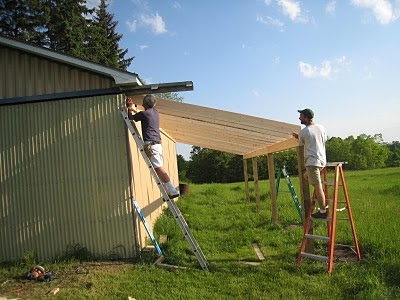
For example, This year we offered a chicken share where people pre-arranged whole broilers which we'll deliver late summer or early fall. Now that we've promised all these people some 250 chickens, we actually need to raise them. Part of that is giving them a place to live, so my carpenter father-in-law Don and I have been diligently building a lean-to off the side of our woodshed (mainly Don...he's the professional. I just haul tools and stuff for him). It still needs some tin for the roof, but the hard part is done we hope. As you can see from the picture, the lean-to juts into our pasture, so, when the chicks arrive they will have easy and free access to grass and pasture.

In the box:
Salad Mix
Napa Cabbage
Spinach
Baby Bok Choy
Strawberries
Daikon Radish


Catalina Dressing
Taken from the U of M nutrition program that Maree teaches at Pelican Rapids Elementary

Ingredients:
2/3 cup canola oil (or other vegetable oil)
1/2 cup sugar or equivalent sugar substitute
2/3 cup ketchup
1/2 cup lemon juice
1/2 teaspoon garlic powder
1/2 teaspoon onion powder
Mix all ingredients well. Store in refrigerator.
Serving Size: 2 Tablespoons

Wednesday, March 03, 2010

Annual Membership Drive


Well, we're getting ready for another season and we're putting out the call for members!

This little blog entry is like my own form of an annoying public radio membership drive: "We can't do this without you, the members..." And this is absolutely true. Seriously. We can't. We will be starting hundreds and hundreds of transplants soon, a big risk when you consider the tending, planting, weeding, and harvesting that comes between us and a finished vegetable crop. If we didn't have our CSA membership who already paid up to receive a share of the season's harvest, we'd be a bit more hesitant about putting all those plants in the ground hoping somebody's going to purchase all that produce when harvested.

We are changing up our CSA program a bit this year. We continue to have a "regular" CSA share ($400) where you receive a delivery of a mix of produce every week, but we've also added a couple other options:
  • The "every-other-week share" ($225). The name kind of says it. You get a delivery every other week and we're starting this especially for couples who get overwhelmed by a regular share. Chet and Paulette Nettestad of Pelican Rapids were our every-other-week trial run last year, and, from talking with them, it seemed to be a good amount for two people and worked out well.
  • The "a la carte share" (increments of $100). This is a customized delivery every other week, and, like an a la carte menu, you choose what you want from our online order system (www.localdirt.com) earlier in the week and we deliver on Fridays. Think about it as having a tab with us. You put in $100, $200, $300 at the beginning of the season and we keep track of what you order and let you know your balance monthly. On our site we also carry Organic Valley dairy products, meats, and eggs you can order too. This is a "use it or loose it" option. You will have from now until December to use your tab and whatever is leftover will be donated to Lutheran World Relief, because it's a little harder for people around the world to feed themselves than for us here...I like their approach to sustainable rural development and I'm a Lutheran.
  • The "chicken share" ($60). You receive 6 chickens (5-6 lbs) in three deliveries from late summer to early fall. The chickens will be whole, frozen, and plastic wrapped just like a whole chicken in the store.
So, if you are interested in becoming a member of Lida Farm, please get in contact with us. Our e-mail is lidafarmer@gmail.com and our phone is 218-342-2619. Call with questions...you won't be bugging us. Our brochure about our CSA program and the order form are linked below. But please make sure we are not filled up for the season and you're in our delivery area before sending in the order form.

Click here for a brochure about our CSA
Click here for our order form

Sunday, January 10, 2010

Lida Farm in Winter

What happens on the Farm all winter? Although you'd think that we would try to do nothing, I keep finding projects to do. So far has been a laundry list of repairs and maintenance which I've been trying to get to for a long time: fixing the sheep feeders that have been broken the last 6 months, cleaning the chicken coop, putting in a glass pane in the barn that I shattered 2 years ago...it goes on. One of the biggest projects was putting woven wire fence around the back pasture so those sheep have something to eat in the middle of the summer next year.

But probably the project I'm most proud of so far is our skating rink. Neither of the kids have skated before, but they did both get skates for Christmas this year. I figured there's no better place to learn than on the pond across the sheep pasture. It took a few hours of shoveling, scraping with an ice scraper, and taking water out of a fish hole with
a gallon jug, we were in business!

Me putting on the finishing touches, sweeping the snow off with the broom.


Willem's first skate

Monday, November 09, 2009

Neufchatal and Cream Cheese Special

We will be delivering again this Wednesday, November 11 throughout the area. I'm thinking we're the only organic dairy route in the nation, so join up to say you're on the cutting edge.

We have organic cream cheese and Neufchatal on special at $2.25 each and still have a good number of whole chickens for sale as well as some winter squash. Please order through our local dirt site to let us know what you'd like:
https://www.localdirt.com/user_product_list-a241.html?id=1535&type=delivery

We will also be doing one other delivery before Thanksgiving and will have our own lamb available at the end of the month. You can also arrange to pick up if that works better.